

 English


Blog

2026-04-03 18:34:26
In modern manufacturing,the choice of Cutting Fluid is a critical decision that affects tool life,surface quality,and operational efficiency.Among the available options,synthetic Cutting Fluids have emerged as a popular choice for industries ranging from automotive to aerospace.Understanding their properties and how they differ from semi-synthetic and mineral oil-based fluids is essential for manufacturers looking to optimize their machining processes.
1.What Is Synthetic Cutting Fluid?
Synthetic cutting fluid is a fully water-soluble,chemically engineered fluid designed to provide superior cooling and lubrication in machining operations.Unlike traditional mineral oils,synthetic fluids contain no oil;instead,they rely on a combination of additives to improve heat dissipation,reduce friction,and prevent corrosion.
In precision operations like EDM,EDM Fluid or EDM dielectric fluid acts not only as a coolant but also as a medium to carry away eroded particles,ensuring efficient material removal.
2.Comparison with Semi-Synthetic Fluids
Semi-synthetic fluids combine mineral oils with water-soluble chemicals,offering a balance between lubrication and cooling.While they are more effective than pure mineral oils in heat management,they contain a portion of oil,which can leave residue and require additional maintenance.
In contrast,synthetic cutting fluids are 100%chemical-based,offering higher cooling efficiency and cleaner operation.For EDM applications,EDM oil is preferred when a stable dielectric medium is critical,while semi-synthetic fluids cannot provide the same electrical consistency.
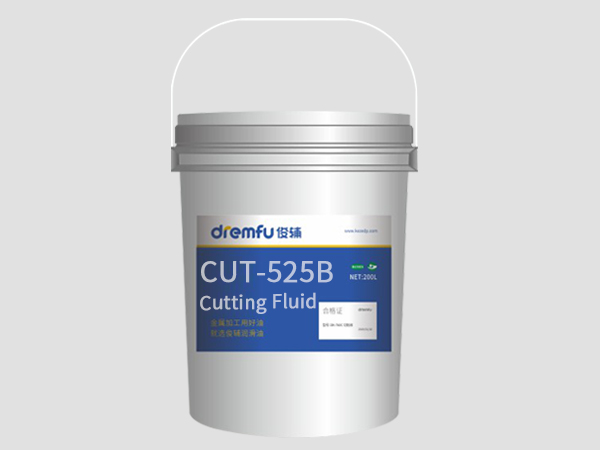
3.Comparison with Mineral Oil-Based Fluids
Mineral oil-based fluids rely primarily on oil for lubrication,with limited water content for cooling.They provide good lubrication but are less effective at heat removal,making them less suitable for high-speed machining.Mineral oils may also pose environmental and disposal challenges due to their petroleum content.
Synthetic cutting fluids outperform mineral oils in several ways:higher cooling rates,reduced residue formation,and better compatibility with modern machining materials such as aluminum alloys and titanium.EDM machining fluid or Electrical discharge machining fluid demonstrates similar advantages,providing consistent spark performance and minimal contamination.
4.Key Advantages of Synthetic Cutting Fluids
Superior Cooling:Rapid heat dissipation prevents thermal damage to tools and workpieces.
Clean Operation:Minimal residue reduces maintenance and cleaning effort.
Extended Tool Life:Lower friction and optimized lubrication reduce tool wear.
Environmental Benefits:Free from chlorinated compounds and heavy metals,making disposal easier.
Compatibility with High-Speed CNC and EDM:Supports demanding operations without compromising performance.
5.When to Use Synthetic Cutting Fluids
Synthetic cutting fluids are ideal for high-speed CNC machining,precision turning,and milling operations.They are particularly effective when machining heat-sensitive materials or performing long production runs.In EDM operations,using EDM dielectric fluid ensures consistent spark generation,while EDM oil provides excellent lubrication and cooling for electrodes and workpieces.
Conclusion
Choosing the right cutting fluid is crucial for efficient,precise,and environmentally responsible manufacturing.Synthetic cutting fluids offer unmatched cooling,lubrication,and operational cleanliness compared to semi-synthetic and mineral oil fluids.For processes like EDM,integrating EDM fluid,EDM machining fluid,or Electrical discharge machining fluid ensures optimal performance and tool longevity.Understanding these differences allows manufacturers to select the best fluid for their specific needs,ultimately improving productivity and reducing operational cost

Guangdong Junfu Lubrication Technology Co., Ltd. is a private science and technology enterprise integrating independent research and development, production, sales and service.
Copyright © 2026 Guangdong Junfu Lubrication Technology Co., Ltd. All rights reserved.