

 English


Blog

2026-05-06 20:28:15
In copper tube manufacturing,lubrication is often treated as a supporting factor,but in reality,the quality of copper tube Drawing Oil directly determines the final performance of the product.Many manufacturers underestimate the long-term impact of using low-quality lubricants,only to face quality issues later in production and downstream applications.
One of the most common hidden problems is surface inconsistency.Low-grade Drawing Oil often fails to maintain stable lubrication during high-pressure deformation,which leads to micro-scratches,uneven brightness,or even subtle surface scoring that may not be visible immediately.Over time,these defects can affect corrosion resistance and coating adhesion performance of the copper tubes.
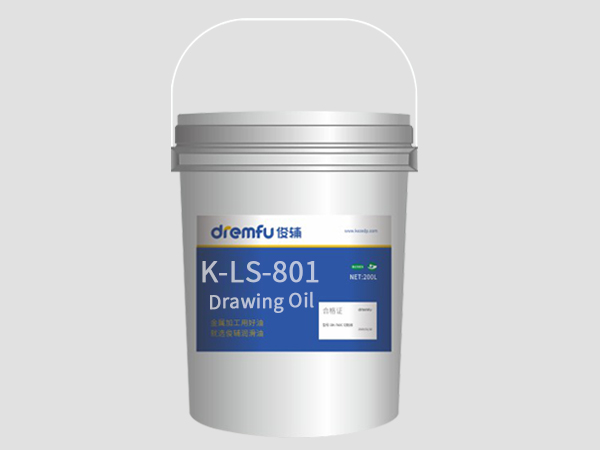
Another critical issue is residue accumulation.Inferior Copper Tube Drawing Oil tends to carbonize or leave behind sticky residues during heat generated in the drawing process.These residues can interfere with subsequent cleaning,welding,or brazing processes,reducing overall production efficiency and increasing maintenance costs.
Dimensional instability is also a less visible but serious consequence.When lubrication is inconsistent,friction increases between the die and copper material,causing uneven elongation and slight deviations in wall thickness.This can compromise precision applications such as HVAC systems or refrigeration tubing.
In large-scale production environments,many factories choose to work with a stable copper tube Drawing Oil wholesale supplier to ensure batch consistency and avoid unpredictable quality fluctuations.Reliable suppliers are often preferred over low-cost alternatives because they provide better control over viscosity stability and thermal resistance.
From a procurement perspective,sourcing directly from a copper tube drawing oil China supplier has become a common strategy for global manufacturers seeking both quality assurance and cost efficiency.However,buyers must carefully evaluate whether low copper tube drawing oil factory price offerings compromise long-term performance stability.
Ultimately,while low-quality lubricants may appear cost-effective at first,their hidden impact on product durability,processing efficiency,and surface quality can significantly outweigh initial savings.

Dongguan Keze New Materials Co., Ltd. is a private science and technology enterprise integrating independent research and development, production, sales and service.
Copyright © 2026 Guangdong Junfu Lubrication Technology Co., Ltd. All rights reserved.