

 English


Blog

2026-07-31 10:04:23
Stainless Steel Drawing Oil (SSDO) is defined by five core technical properties: extreme pressure (EP) lubrication, thermal stability and oxidation resistance, corrosion protection, surface finish and cleanability, and adhesion/wettability. Together, these properties allow SSDO to form a stable lubricating film between the die and the metal, withstanding the high pressure, friction, and work-hardening behavior specific to stainless steel and high-nickel alloys.
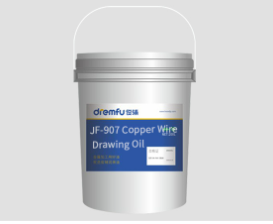
SSDO relies on sulfurized fatty acid esters and chlorinated paraffins that react with the metal surface under high pressure—up to 3000 MPa—to form a chemically stable lubricating film. High-performance formulations such as Divyol FN42 achieve a maximum seizure-free load (Pb) of 1600 N and a sintering load (Pd) of 7000 N (ASTM D2783), which supports reliable performance even during deep drawing of 304/316 stainless steel tubes with wall thickness reductions exceeding 50%. A kinematic viscosity of 36–40 cSt at 40°C (ASTM D445) keeps flow characteristics stable across both high-speed (≥15 m/s) and low-speed (≤0.5 m/s) drawing operations.
Because drawing generates significant heat, SSDO needs to resist breakdown across a wide temperature range. Premium formulations like HDM-1600 maintain a flash point of ≥280°C (ASTM D92) and a pour point of ≤-2°C (ASTM D97), allowing stable operation from -20°C to 250°C. In oxidation stability testing, total acid number (TAN) increases by no more than 0.3 mg KOH/g after 500 hours of continuous use at 120°C—a result that limits sludge formation and can extend oil life 3–5 times longer than conventional lubricants.
Stainless steel components often move through storage and transport before final use, making corrosion protection essential. SSDO formulations use neutral rust inhibitors such as triazoles and carboxylates, achieving a copper strip corrosion rating of 1b (ASTM D130) after 3 hours at 100°C. For marine-grade stainless steel like 316L, formulations such as K-LS805 provide salt spray resistance of 500+ hours (ASTM B117), helping prevent white rust and pitting.
For applications with strict surface requirements—such as stainless steel springs used in medical devices—low-residue SSDO variants like Matrix FDX 3012 are engineered for easy filtration (pore size ≤5 μm) and straightforward post-drawing cleaning. After annealing at 800°C, treated wire surfaces can achieve a residual carbon content of ≤0.02%, while polar compounds in the oil help reduce surface roughness (Ra) from 0.8 μm down to ≤0.2 μm (ISO 4287).
Drawing dies aren't always flat or vertical, and SSDO needs to stay in place on curved or angled surfaces. High-viscosity base oils—such as HDM-6000 at 6000 cSt at 40°C—improve adhesion to vertical dies and curved geometries, preventing lubricant slippage during high-angle drawing (≥15°). This consistent film thickness can reduce die wear by 40–60% compared to lower-viscosity oils.
No single property carries the full performance load on its own. A Drawing Oil with strong EP lubrication but poor thermal stability will break down under sustained heat; one with excellent corrosion protection but weak adhesion may still slip on angled dies. Because stainless steel has a high work-hardening rate (n-value ≤0.3) and relatively low thermal conductivity (15 W/m·K), SSDO formulations are engineered to balance all five properties simultaneously—which is also why formulation tends to vary by application, from fine wire drawing to deep-drawn automotive components.
If you're evaluating SSDO for a specific stainless steel or high-nickel alloy application, sharing your drawing speed, reduction ratio, and surface finish requirements can help match the right formulation to your process.

Dongguan Keze New Materials Co., Ltd. is a private science and technology enterprise integrating independent research and development, production, sales and service.
Copyright © 2026 Guangdong Junfu Lubrication Technology Co., Ltd. All rights reserved.