

 English


Blog

2025-12-03 16:19:11
In modern copper tube production, manufacturers face constant pressure to deliver tubes with exceptionally smooth surfaces, tight dimensional accuracy, and zero visible defects. Any scratch, drag mark, oxidation trace, or minor deformation can result in rejected batches and significant production losses. This is why the role of Drawing Copper Tube Oil has become a core factor in determining whether the copper tube drawing process can achieve premium quality results. The correct lubricant does far more than reduce friction—it directly influences surface finish, stability, tool life, and even long-term corrosion resistance.
During copper tube drawing, metal is forced through a die under extremely high pressure. Without proper lubrication, the copper surface is exposed to direct metal-to-metal contact, which leads to galling, scoring, abrasive scratches, heat accumulation, and rapid die wear. A high-performance Copper Tube Drawing Oil creates a stable lubricating film between the tube and the die, preventing these issues at the source. This lubricating layer ensures the copper surface slides smoothly, reducing mechanical friction and distributing pressure evenly throughout the drawing zone. As a result, the tube exits the die with a noticeably smoother finish, fewer micro-imperfections, and less risk of internal or external scoring.
Surface roughness is one of the most important quality indicators for HVAC, refrigeration, plumbing, medical gas tubing, and capillary tube production. The cleaner and smoother the surface is after drawing, the easier it becomes for downstream applications such as bending, welding, flaring, brazing, or further cold working. High-quality Copper Tube Lubricant minimizes the friction coefficient, which in turn reduces heat build-up. Heat is often responsible for softening the copper surface, making it more susceptible to scratches during deformation. By controlling thermal accumulation, the lubricant ensures dimensional accuracy and prevents the formation of drag lines that commonly appear when copper softens unevenly.
In addition to friction reduction, the detergent and anti-wear additives inside modern Copper Tube Forming Oil help carry away debris generated during deformation. Small copper particles, once trapped between the tube and the die, are one of the main causes of scuffing and fine scratches. An advanced forming oil disperses these particles quickly and keeps the contact area clean throughout the cycle. This makes the drawing process more stable and prevents micro-abrasion that gradually damages the copper surface.
Another critical contribution of Drawing Copper Tube Oil is preventing oxidation and discoloration during long production cycles. When copper is drawn at high speed, the combination of heat and oxygen exposure can cause surface staining. High-performance oils create a protective barrier that reduces oxidation, meaning the finished tubes retain their natural metallic color and brightness. This is especially important for decorative, architectural, or exposed copper applications that require a flawless surface appearance.
Many manufacturers also overlook how the correct oil improves die life and stability. When dies remain in better condition for longer, they produce a more consistent surface quality from batch to batch. Poor lubrication accelerates die wear, and a worn die is one of the most common sources of scratches and grooves. By extending die life, a well-formulated Drawing Oil ensures consistent tube quality and reduces maintenance downtime.
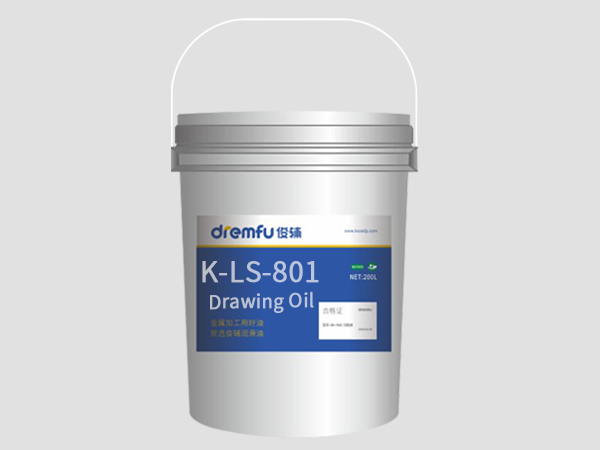
From a production perspective, consistent lubrication results in better line speed and fewer interruptions. The reduced friction allows tubes to pass through dies smoothly, minimizing vibration and decreasing the likelihood of tube bending irregularities. Stable flow also reduces breakage, which keeps the production line running efficiently and ensures higher output per shift.
Choosing the right Drawing Copper Tube Oil typically depends on tube size, wall thickness, drawing speed, die material, and whether the process requires multiple passes. A heavier oil may provide better cushioning for thick-wall tubes, while a more fluid option works best for precision or capillary tubes. Synthetic oils provide superior thermal stability, while mineral-based oils remain a cost-effective solution for general-purpose use. In many cases, a hybrid formulation offers the best combination of lubricity, cooling, and detergency.
The final result of proper lubrication is a copper tube with a more refined and uniform surface. The smoother the surface, the longer the life of the tube in service because residues, moisture, or contaminants have fewer micro-grooves to latch onto. This also helps prevent internal corrosion, which is crucial for HVAC and refrigeration systems. Tubes that begin their life with higher surface integrity simply perform better and last longer in real-world applications.
In conclusion, Drawing Copper Tube Oil is not just a supporting material in copper tube manufacturing—it is one of the most important factors behind surface quality and scratch control. By reducing friction, improving cooling, removing debris, protecting against oxidation, and enhancing die life, a well-designed lubricant ensures that copper tubes meet the high-quality standards required by international markets. For manufacturers targeting competitive export markets or premium product lines, investing in the right Copper Tube Drawing Oil is essential for achieving consistent, defect-free production.

Guangdong Junfu Lubrication Technology Co., Ltd. is a private science and technology enterprise integrating independent research and development, production, sales and service.
Copyright © 2026 Guangdong Junfu Lubrication Technology Co., Ltd. All rights reserved.