

 English


Blog

2025-12-08 18:21:55
Titanium has become one of the most widely used advanced materials across aerospace,medical implants,automotive components,and high-performance industrial applications.Manufacturers choose titanium because of its excellent strength-to-weight ratio,corrosion resistance,and biocompatibility.But while titanium brings enormous advantages in end-use performance,machining it has always been a challenge.Anyone who has worked with titanium immediately notices that the material behaves very differently from steel,aluminum,or copper alloys.This is the reason many machine shops specifically search for Cutting Fluid for titanium,hoping to improve tool life,lower temperature,and ensure stable machining conditions.
Titanium’s unique properties directly affect how it reacts to cutting forces.One of the biggest challenges is its extremely low thermal conductivity.Unlike aluminum or brass,which rapidly dissipate heat away from the cutting zone,titanium traps heat exactly where the cutting edge meets the material.This high-temperature concentration leads to thermal softening of the tool edge,rapid flank wear,and even catastrophic tool failure.As cutting temperatures rise beyond safe limits,tool coatings crack,edges deform,and chips weld onto the tool surface.Without a proper Cutting Fluid formulated specifically for titanium,the machining process becomes unstable,slow,and unnecessarily expensive.
Another characteristic of titanium is its strong chemical reactivity at elevated temperatures.When the cutting zone reaches several hundred degrees,titanium tends to react with common tool materials such as carbide or high-speed steel.This chemical affinity accelerates adhesive wear and promotes built-up edge formation.The adhesive layer between the titanium and the cutting edge drastically reduces tool sharpness,increases cutting forces,and worsens the surface finish.A specialized Cutting Fluid for titanium reduces this chemical reactivity by forming a lubricating protective film that prevents metal-to-metal welding under high load and high temperature.
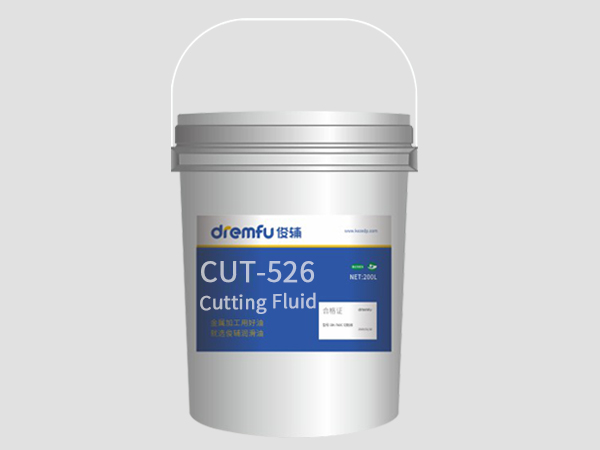
Titanium also exhibits significant elasticity compared with traditional metals.During machining,the material deflects away from the tool and springs back as the tool exits the cutting zone.This“spring-back effect”increases friction and causes rubbing along the tool flank.If the Cutting Fluid cannot provide adequate lubricity,this repeated rubbing generates even more heat,further worsening the temperature problem.A high-lubricity cutting fluid formulated for titanium significantly reduces this friction,helping maintain consistent chip formation and protecting the cutting edge from unnecessary wear.
The chips produced during titanium machining also present challenges.Titanium chips tend to be long,tough,and difficult to break.These continuous chips not only interfere with the cutting zone but also increase the likelihood of tool damage if they wrap around the spindle or cutter.Proper chip evacuation is essential,and a quality cutting fluid for titanium provides the cooling pressure and lubricity needed to help eject chips away from the cutting path.In high-speed machining,especially in aerospace manufacturing,high-pressure coolant systems are often paired with titanium-specific cutting fluids to improve chip control and enhance cycle stability.
Surface finish and dimensional accuracy are also heavily influenced by fluid choice.As heat builds up in the cutting zone,thermal expansion of the workpiece can cause dimensional drift,while tool wear changes the final surface quality.A specialized cutting fluid maintains lower temperatures and reduces tool degradation,allowing the machine to hold tighter tolerances and produce a more consistent finish.This is especially important in medical implant machining,where every surface must meet strict safety and quality requirements.
From a cost perspective,titanium machining without the correct fluid becomes extremely expensive.Frequent tool replacements,lower feed rates,shorter tool life,and unstable cutting conditions all contribute to higher production costs.Many shops discover that switching to a dedicated cutting fluid for titanium reduces tool wear by 30–50%and increases machining efficiency without changing the tooling or CNC program.The return on investment is almost immediate,especially for industries that machine titanium regularly.
In summary,titanium requires a special cutting fluid because of its low thermal conductivity,high chemical reactivity,strong elasticity,and difficult chip formation.Only a formulation designed specifically for titanium can provide the necessary cooling,lubricity,and anti-welding protection the material demands.For manufacturers seeking improved productivity,better surface quality,and longer tool life,choosing the right cutting fluid for titanium is not just beneficial—it is essential for maintaining competitive machining performance in today’s high-precision manufacturing industries.
S

Guangdong Junfu Lubrication Technology Co., Ltd. is a private science and technology enterprise integrating independent research and development, production, sales and service.
Copyright © 2026 Guangdong Junfu Lubrication Technology Co., Ltd. All rights reserved.