

 English


Blog

2025-12-08 18:21:56
In recent years,titanium has become a strategic material in aerospace,automotive lightweighting,energy equipment,and the medical device industry.As more manufacturers begin machining titanium components,many shops wonder whether they can use standard or universal Cutting Fluids instead of purchasing dedicated formulas.On the surface,universal Cutting Fluids appear cost-effective and convenient,especially for facilities that machine different metals.However,when dealing with titanium,compatibility becomes a far more complex issue.Whether a universal product can truly work depends on its formulation and whether it can handle the unique challenges titanium presents.Understanding this is essential for anyone trying to maintain stable machining performance or optimize a Cutting Fluid for titanium.
Universal Cutting Fluids are typically designed to perform adequately on common metals such as carbon steel,stainless steel,aluminum,brass,and copper alloys.They provide general cooling and lubrication,but their formulations often lack the extreme-pressure additives and high-temperature stability required for titanium machining.Titanium’s very low thermal conductivity means heat remains concentrated in the cutting zone,raising tool temperature quickly.A universal coolant may offer decent cooling at first,but once machining enters moderate or high load conditions,the fluid may fail to control heat effectively.This leads to accelerated tool wear,inconsistent chip formation,and even burning or discoloration on the workpiece surface.
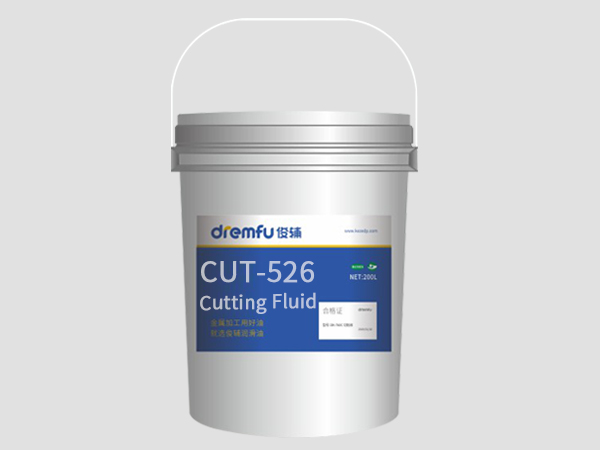
Another major issue is titanium’s tendency to chemically react with cutting tools when heated.Adhesive wear and built-up edge formation are common,especially in aerospace-grade titanium alloys.Universal cutting fluids generally do not contain the strong anti-weld additives needed to prevent titanium from sticking to the cutting edge.Without proper lubrication,the cutting tool experiences increased friction,causing overheating and premature failure.By contrast,a specialized cutting fluid for titanium is formulated with advanced lubrication agents that maintain protective films even at high temperatures,preventing metal-to-metal contact.
Chip evacuation also plays an important role.Titanium chips are tough,long,and prone to wrapping around tools.A general-purpose coolant may not provide adequate lubricity and pressure to assist in chip removal,especially during deep-cutting or high-speed machining.Poor chip control raises cutting forces and creates additional heat,worsening tool wear.Many manufacturers operate high-pressure coolant systems specifically to drive titanium chips away from the tool path.Universal fluids are often not designed for such high-pressure applications,resulting in unstable machining performance.
Using universal cutting fluids can also reduce the accuracy and quality of the finished part.When the coolant fails to control heat,thermal expansion of the workpiece and excessive tool degradation cause dimensional inconsistency.Surface finish becomes unpredictable,which is unacceptable for industries like medical and aerospace where strict tolerances must be maintained.Shops attempting to machine titanium with universal fluids often compensate by lowering feed rates or reducing cutting depth,but this only reduces productivity and increases cost.
There is also the issue of tool life.Titanium machining is already demanding,and universal cutting fluids typically shorten tool life significantly compared to a fluid designed for titanium alloys.Replacing cutting tools more frequently may cost far more than using the appropriate coolant.Many facilities notice a dramatic improvement in tool longevity—often 30%to 60%—once they switch to a dedicated cutting fluid for titanium.This is because the specialized formula reduces friction,limits chemical wear,and maintains stability under high thermal load.
However,this does not mean universal cutting fluids never work.Some advanced universal coolants claim compatibility with a wide range of difficult-to-machine metals,including titanium.These premium products include enhanced extreme-pressure additives and high-temperature lubricants,making them more suitable than standard universal coolants.Even so,performance usually cannot match a dedicated titanium-specific formulation,especially in continuous production environments where consistency and repeatability are essential.
Ultimately,whether a universal cutting fluid can work for titanium depends on your machining requirements.For occasional light machining,prototyping,or low-speed operations,a high-quality universal coolant may be acceptable.But for aerospace components,medical implants,or high-precision industrial parts,relying on universal fluids introduces unnecessary risks.When machining titanium is a regular operation,the best long-term solution is to use a specialized cutting fluid for titanium engineered to handle the material’s thermal behavior,reactivity,and chip characteristics.
In conclusion,while universal cutting fluids offer convenience for general machining,they are rarely the optimal choice for titanium.The unique challenges of titanium—high heat concentration,chemical reactivity,poor chip evacuation,and tight tolerance requirements—demand a cutting fluid formulated specifically for this material.For manufacturers seeking stable performance,longer tool life,and better surface quality,investing in the right cutting fluid for titanium is a strategic decision that enhances productivity and ensures consistent,high-quality results.

Guangdong Junfu Lubrication Technology Co., Ltd. is a private science and technology enterprise integrating independent research and development, production, sales and service.
Copyright © 2026 Guangdong Junfu Lubrication Technology Co., Ltd. All rights reserved.