

 English


Blog
2025-12-08 18:54:58
Understanding the formulation of aluminum alloy water based Drawing Fluid is essential for any manufacturer who wants to improve deep drawing efficiency, reduce defects, and maintain stable lubrication performance. Water-based drawing lubricants have become increasingly popular in the metal forming industry because they offer excellent cooling, reduced residue, and improved environmental safety. But what exactly goes into these advanced formulations, and why do these ingredients matter?
Unlike traditional oil-based lubricants, water-based products rely on a mixture of emulsifiers, anti-wear additives, corrosion inhibitors, surface-wetting enhancers, and extreme-pressure components to provide a balanced and robust lubrication system. Each ingredient plays a unique role in ensuring the lubricant performs effectively during aluminum deep drawing.
The base component of any water-based drawing lubricant for aluminum is water itself. Water provides exceptional cooling capability, which is critical during aluminum deformation where temperatures rise rapidly due to friction. The cooling effect helps maintain die stability, prevents thermal expansion, and reduces the risk of surface defects such as scratches or burning. This is one of the reasons why many manufacturers now prefer Aluminum Alloy Water Based Drawing Fluid over traditional oils.
To convert water into a stable lubricant, emulsifiers and surfactants are added. These ingredients help disperse oil-based components within the water phase, creating a stable emulsion that adheres uniformly to the aluminum surface. Surfactants also enhance wetting, allowing the lubricant to spread evenly across the metal sheet. Uniform wetting prevents localized friction hotspots and supports consistent aluminum deep drawing lubrication throughout the process.
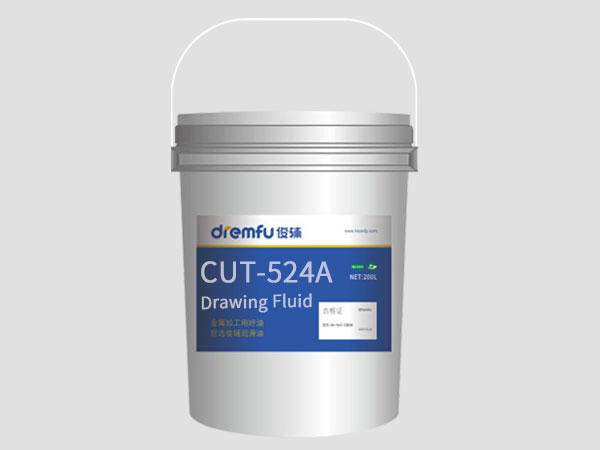
Lubricity additives are another core component. These materials reduce friction between the aluminum and the die surfaces, preventing galling, sticking, and metal transfer. Common lubricity additives include synthetic esters, polymeric lubricants, or high-performance boundary additives that function even under high pressure. They ensure the aluminum alloy Water Based Drawing Fluid maintains a low-friction protective film that remains stable across long production cycles.
Extreme-pressure (EP) additives are also crucial. During high-speed or deep forming operations, pressure at the tool interface can exceed the limits of standard lubricants. EP additives react with the metal surface to create a protective barrier that prevents welding or tearing. This barrier reduces wear and helps the lubricant maintain stable performance even when the aluminum undergoes deep deformation.
Anti-wear additives complement EP agents by protecting both the aluminum surface and the die material. These additives minimize tool abrasion, extending die life and reducing maintenance downtime. This is particularly important in applications that run continuous production cycles, where lubricant stability and tool protection directly impact operational cost.
Corrosion inhibitors are added to protect aluminum from oxidation or staining during and after the drawing process. Because aluminum is sensitive to certain chemical reactions, corrosion protection is critical for industries requiring high surface quality. A well-formulated water based drawing lubricant for aluminum ensures the metal remains bright, clean, and free from discoloration.
Another essential ingredient group is biocides and preservatives. Since water-based systems can be susceptible to microbial growth, these components prevent bacteria or mold from degrading the lubricant. This maintains product stability, prevents odor issues, and keeps the aluminum deep drawing lubrication system performing consistently over long periods.
Anti-foaming agents are also included because excessive foam can disrupt lubricant delivery, reduce surface coverage, and cause inconsistent film formation. A well-balanced aluminum alloy Water Based Drawing Fluid contains defoamers that ensure smooth flow and stable application across different circulation systems.
Depending on the specific formulation, some manufacturers may also include viscosity modifiers, pH stabilizers, or specialty agents designed to enhance cooling or film strength. These optional components help tailor the lubricant for specific applications such as automotive aluminum stamping, precision electronics housings, or cookware manufacturing.
What makes water-based drawing lubricants superior in many applications is the synergy between all of these ingredients. Together, they create a lubricant that cools efficiently, spreads evenly, protects metal surfaces, reduces friction, and maintains stability even under demanding production conditions. This balanced formulation supports cleaner working environments, easier post-cleaning, and better part consistency.
For manufacturers seeking optimal performance, choosing the right water based drawing lubricant for aluminum is not just about selecting a product but understanding how the formulation aligns with their production requirements. Variables such as drawing depth, speed, die materials, and aluminum alloy grade all influence which lubricant formulation will deliver the best results.
In summary, aluminum alloy water based drawing fluid is a sophisticated blend of cooling agents, emulsifiers, boundary lubricants, EP additives, anti-wear agents, corrosion inhibitors, defoamers, and preservatives. Each ingredient is engineered to support smooth metal flow, protect surfaces, and ensure consistent aluminum deep drawing lubrication. By understanding the purpose of each component, manufacturers can make informed decisions and select a lubricant that enhances performance, reduces defects, and extends the life of their tooling and equipment.

Guangdong Junfu Lubrication Technology Co., Ltd. is a private science and technology enterprise integrating independent research and development, production, sales and service.
Copyright © 2026 Guangdong Junfu Lubrication Technology Co., Ltd. All rights reserved.