

 English


Blog

2026-01-28 09:02:02
In high-temperature industrial environments,lubrication is not just about reducing friction—it is about protecting equipment,ensuring operational stability,and preventing costly downtime.Two of the most commonly used solutions in extreme heat conditions are high temp lubricating oil and High Temperature Grease.While both are designed to perform under elevated temperatures,they serve different mechanical purposes and are not interchangeable in many applications.
Understanding the differences between these two lubrication solutions is critical for equipment engineers,maintenance teams,and industrial buyers who want to improve machine reliability and reduce long-term operating costs.
High temp lubricating oil is a specially formulated fluid lubricant designed to remain stable,chemically resistant,and thermally reliable under extreme heat conditions.It flows freely through systems,penetrates tight mechanical clearances,and continuously lubricates moving parts such as bearings,chains,gears,shafts,and sliding components.Because of its fluid nature,it is ideal for systems that require constant circulation,heat dissipation,and uniform lubrication coverage.
High temperature grease,on the other hand,is a semi-solid lubricant composed of base oil,thickener,and additives.The thickener allows the grease to stay in place,making it suitable for sealed components,vertical surfaces,and applications where oil leakage or re-lubrication is difficult.Grease is often used in bearings,joints,and enclosed mechanical parts where retention is more important than flow.
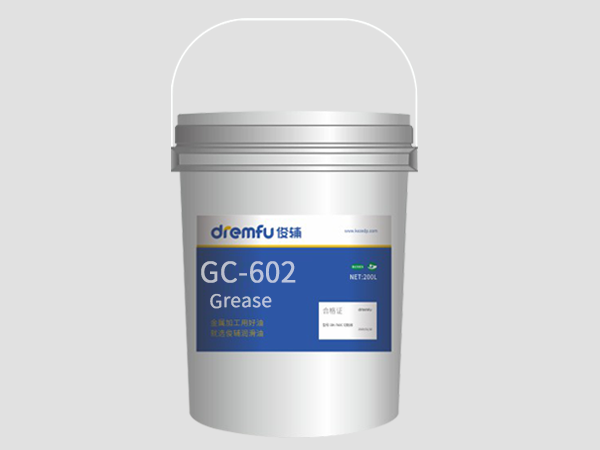
The core difference between high temp lubricating oil and high temp grease lies in mobility and heat management.High temp lubricating oil flows and circulates,carrying heat away from friction points,while grease remains stationary,providing long-term surface protection but limited heat dissipation.In high-speed or continuous-operation systems,oil performs significantly better because it can remove heat and contaminants from contact surfaces.In contrast,grease may trap heat in confined spaces,which can accelerate oxidation and degradation under extreme temperatures.
From a performance perspective,high temp lubricating oil offers superior thermal stability when formulated with synthetic base oils such as PAO,ester,or silicone.These oils resist breakdown,evaporation,and viscosity loss at elevated temperatures,making them suitable for furnaces,ovens,conveyors,chains,industrial fans,compressors,and metallurgy equipment.high temperature grease can perform well in moderate high-heat environments,but in continuous extreme heat exposure,grease thickener structures may degrade faster than fluid oils.
Another critical difference is contamination control.High temp lubricating oil systems often include filtration and circulation systems that remove particles,carbon residue,and oxidation byproducts.This keeps the lubrication system clean and stable over time.Grease systems lack this self-cleaning mechanism,meaning contaminants remain trapped in the lubrication zone,potentially increasing wear in high-temperature environments.
In terms of maintenance strategy,high temp lubricating oil supports predictive maintenance and condition monitoring.Oil analysis can detect oxidation levels,contamination,viscosity changes,and thermal degradation before failures occur.This makes it a powerful tool for modern industrial maintenance systems.High Temperature Grease,while reliable for sealed systems,offers limited diagnostic feedback and relies more heavily on scheduled re-lubrication cycles.
Cost efficiency is another factor buyers consider.Although high-quality high temp lubricating oil may have a higher initial price,it often delivers lower long-term operational costs through reduced wear,longer service intervals,and lower equipment failure rates.High temperature grease may appear cost-effective upfront,but frequent reapplication and component wear can increase total lifecycle costs in high-heat applications.
In real-world applications,high temp lubricating oil is the better solution for continuous high-speed systems,high-load industrial equipment,and environments where heat dissipation and cleanliness are critical.High temperature grease is more suitable for static components,sealed bearings,and applications where lubricant retention is more important than circulation.
Rather than asking which is better in general,the real question is which is better for your specific application.If your equipment operates continuously under extreme heat,requires cooling through lubrication flow,and needs long-term stability,high temp lubricating oil is the superior choice.If your system requires stationary lubrication,minimal leakage,and long-term retention in enclosed components,high temperature grease may be more appropriate.
For industrial buyers and engineers,selecting the correct solution is not just a technical decision—it is a business decision that directly impacts production efficiency,maintenance costs,and equipment lifespan.Choosing the right high temp lubricating oil or grease can mean the difference between stable operations and constant mechanical failures.

Guangdong Junfu Lubrication Technology Co., Ltd. is a private science and technology enterprise integrating independent research and development, production, sales and service.
Copyright © 2026 Guangdong Junfu Lubrication Technology Co., Ltd. All rights reserved.