

 English



Choosing the right Wire Drawing Oil comes down to matching the wire material, drawing diameter range, and your equipment's operating conditions to the oil's formulation. Getting this wrong doesn't always cause immediate failure, but it shows up over time as increased wire breakage, surface defects, or shortened die life—all of which cost more than the oil itself.
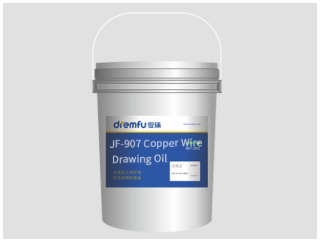
1. Match The Oil To Your Wire Material
Copper and aluminum wire have different drawing behavior, so the additives that protect one metal don't necessarily protect the other. Copper Wire Drawing Oil is formulated with anti-oxidation and anti-corrosion additives specifically tuned to prevent copper from blackening or yellowing during drawing, while aluminum Wire Drawing Oil is built around lubrication and cooling properties suited to aluminum's softer, more heat-sensitive surface.
Why This Matters
Using an oil formulated for the wrong metal won't always cause obvious immediate problems, but it typically shows up as discoloration, inconsistent surface finish, or reduced tool life over repeated production runs.
2. Match The Oil To Your Drawing Diameter Range
Wire drawing is generally divided into large, medium, small, and micro drawing stages, and each stage puts different demands on the oil. A medium-pull oil like JF-905, designed for the 0.1-3.0mm diameter range, prioritizes extreme pressure and anti-wear performance to handle the higher mechanical stress of mid-diameter drawing. A fully synthetic oil like JF-908, built for high-precision drawing down to 0.02-0.1mm (such as enameled wire production), instead prioritizes an ultra-thin, controllable oil film and very low resistivity, since precision and electrical performance matter more than raw wear resistance at that scale.
Why This Matters
An oil designed for large-diameter, high-load drawing won't necessarily deliver the fine oil-film control needed for micro-diameter precision wire, and vice versa—using the wrong grade for your diameter range is one of the more common reasons for inconsistent wire breakage rates.
3. Check Compatibility With Your Drawing Equipment
Different wire drawing machine brands (such as Niehoff, SAMP, Hongtai, and Yongxiong) can behave slightly differently in terms of speed, tension, and cooling setup, so it's worth confirming that your chosen oil has a track record with your specific equipment type rather than assuming universal compatibility.
Not sure which grade fits your equipment and diameter range? Send us your wire diameter, target speed, and machine brand, and we'll recommend the right oil—we typically respond within 24 hours.
4. Consider Your Production Environment
High-speed drawing lines generate more heat and mechanical stress than slower setups, which affects how much cooling performance and anti-foaming stability the oil needs to maintain. If your line runs continuously at high speed, prioritize an oil with proven cooling performance and stable, low-foaming behavior under sustained use rather than one optimized only for basic lubrication.
5. Ask For Real Test Data, Not Just Marketing Claims
Specific, verifiable performance numbers are a good sign a supplier has actually tested the oil for your use case—for example, a documented wire breakage rate reduction (such as from 0.8% to 0.15%) under defined drawing conditions, or a specific oil film thickness and resistivity measurement for enameled wire production. Vague claims without test conditions attached are harder to evaluate and compare across suppliers.
Choosing the right wire Drawing Oil ultimately comes down to being specific about your wire material, diameter range, and equipment—rather than assuming one general-purpose oil will perform equally well across all of them. Since the actual formulation may need adjusting based on your specific processing conditions, sharing details with your supplier before ordering in bulk is generally worth the extra step.
Send Your Inquiry Today