

 English


Blog

2026-09-21 09:03:03
Electrical Discharge Machining (EDM) cannot machine materials that are electrically non-conductive under normal EDM conditions because the process requires electrical current to pass between the electrode and the workpiece. Materials such as most ceramics, glass, rubber, plastics, and conventional polymers generally cannot be directly machined by standard EDM. EDM is primarily designed for electrically conductive materials, including hardened steel, tool steel, carbide, titanium, nickel alloys, copper, and aluminum. The dielectric medium, electrode material, electrical parameters, and workpiece conductivity all influence the machining process.
Understanding which materials are suitable for EDM is important when selecting an EDM process, machine configuration, and EDM oil. A suitable dielectric medium helps control spark discharge, cool the machining zone, and flush away eroded particles during electrical discharge machining.
EDM is fundamentally different from conventional cutting processes. Instead of removing material with a mechanical cutting tool, EDM removes material through a controlled series of electrical discharges between an electrode and the workpiece.
During machining, the workpiece and electrode are separated by a small gap known as the discharge gap or spark gap. A dielectric medium fills this gap. When the electrical voltage reaches a suitable level, the dielectric breaks down locally and creates a plasma channel between the electrode and workpiece.
A short-duration spark then generates extremely high localized temperatures. A small amount of workpiece material melts or vaporizes and is removed from the machining zone. The dielectric fluid then helps cool the area and carry away debris.
Because this process depends on electrical discharge, the workpiece must have sufficient electrical conductivity. This is why metals and many electrically conductive alloys are suitable for EDM, while ordinary insulating materials cannot normally complete the electrical circuit required for spark generation.
Materials with very low electrical conductivity or strong insulating properties are generally unsuitable for conventional EDM. However, material behavior can vary by grade, composition, moisture content, additives, and surface condition.
Most conventional technical ceramics, including alumina and many zirconia-based ceramics, have very high electrical resistance. Since standard EDM depends on electrical discharge between the electrode and workpiece, these materials cannot normally be machined directly using conventional EDM.
There are specialized approaches for certain conductive or partially conductive ceramics. Some advanced ceramic composites can contain conductive phases that allow electrical discharge machining under controlled conditions. Therefore, it is important to distinguish conventional insulating ceramics from electrically conductive ceramic composites.
Most common glass is electrically insulating and therefore cannot be directly processed by standard EDM. Glass typically requires alternative machining technologies such as diamond grinding, laser processing, ultrasonic machining, or other specialized methods.
Natural rubber and most conventional synthetic rubber compounds are electrical insulators. Their lack of sufficient conductivity prevents the stable spark discharge required by EDM.
For rubber components, manufacturers may instead use mechanical cutting, grinding, laser processing, molding, or other processes depending on the required geometry and surface characteristics.
Many engineering plastics, thermoplastics, and thermosetting polymers have poor electrical conductivity. Materials such as standard polyethylene, polypropylene, PTFE, and many grades of nylon generally cannot be machined directly using conventional EDM.
However, electrically conductive polymers and polymer composites containing conductive fillers are a different category. Their EDM machinability depends on whether the material can support a sufficiently stable discharge process.
EDM is particularly valuable for materials that are electrically conductive and difficult to machine using conventional cutting tools.
Common EDM workpiece materials include:
Tool steel
Hardened steel
Stainless steel
Carbon steel
Titanium alloys
Nickel-based superalloys
Copper
Brass
Aluminum alloys
Conductive carbide
Other electrically conductive metal alloys
One of the major advantages of EDM is its ability to machine hardened materials without requiring the cutting tool to mechanically penetrate the workpiece in the same way as conventional milling or turning.
This makes EDM particularly useful for molds, dies, precision components, complex cavities, narrow slots, and intricate geometries.
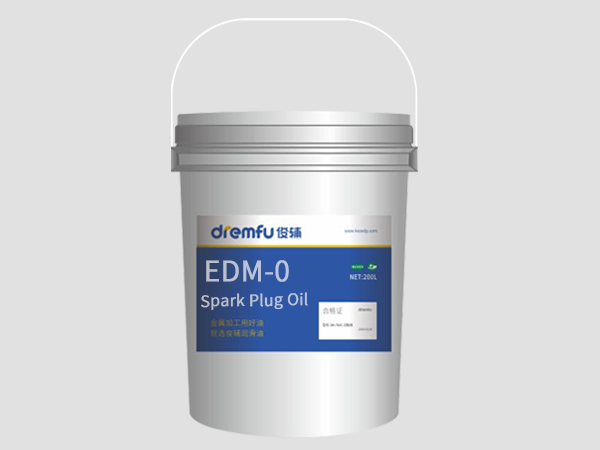
EDM Oil is commonly used as a dielectric medium in die-sinking EDM and other oil-based electrical discharge machining applications. It is not simply a conventional Cutting Oil. Its electrical and thermal properties must be carefully controlled to support stable spark discharge.
During machining, the EDM dielectric fluid separates the electrode from the workpiece. Under normal conditions, the dielectric acts as an electrical insulator. When the electrical field becomes sufficiently strong, localized dielectric breakdown occurs and a spark channel forms.
After the discharge, the dielectric recovers its insulating properties and allows the next controlled discharge to occur. This repeated cycle of insulation, breakdown, discharge, and recovery is essential for stable EDM machining.
The dielectric also performs several additional functions. It helps remove molten particles from the machining gap, transfers heat away from the discharge area, reduces the risk of uncontrolled arcing, and contributes to the overall stability of the machining process.
The performance of EDM machining oil directly affects machining stability, surface finish, electrode wear, flushing efficiency, and productivity. A suitable EDM dielectric oil should provide a balance of electrical, thermal, chemical, and physical properties.
Dielectric strength is one of the most important characteristics. The fluid must remain insulating until the electrical field reaches the required breakdown condition. If breakdown occurs too easily, unstable discharges and short circuits may occur. If the dielectric is too resistant to breakdown, spark generation can become inefficient.
Viscosity influences fluid circulation and debris removal. A fluid that is too viscous may make flushing more difficult, while a very low-viscosity fluid may not provide the desired process characteristics. The appropriate viscosity depends on the EDM machine, machining conditions, workpiece geometry, and flushing system.
Each electrical discharge produces intense localized heat. EDM Fluid helps transfer heat away from the machining zone and electrode. Effective thermal management contributes to dimensional stability and helps reduce excessive thermal damage.
EDM generates fine particles of eroded workpiece and electrode material. If these particles remain in the discharge gap, they can interfere with the electrical field and contribute to unstable machining. Good flushing performance helps remove debris and maintain consistent discharge conditions.
An EDM dielectric fluid should maintain its properties during repeated exposure to heat, electrical discharge, and contaminants. Good oxidation stability can help extend fluid service life and reduce unwanted changes in fluid performance.
The production of professional EDM Oil normally starts with the selection of a suitable refined hydrocarbon base fluid. The base material needs appropriate volatility, viscosity, electrical characteristics, thermal stability, and chemical purity for the intended EDM application.
Depending on the formulation, manufacturers may incorporate carefully selected performance additives to improve oxidation stability, corrosion protection, cleanliness, and service life. The formulation is mixed under controlled conditions to achieve consistent distribution of all components.
After blending, quality control testing can include viscosity measurement, density testing, flash point testing, dielectric performance evaluation, appearance inspection, and stability testing. Some applications may also require testing related to copper electrode compatibility, corrosion behavior, filtration performance, or machining results.
For industrial customers, batch consistency is particularly important. Changes in viscosity, contamination levels, or dielectric behavior can affect discharge stability and machining performance. Professional manufacturing therefore requires controlled raw materials, accurate formulation, filtration, and batch inspection.
EDM provides several advantages when machining conductive materials. It can process hardened metals, produce intricate shapes, and create narrow cavities and fine features that may be difficult to achieve with conventional cutting methods.
Because material removal occurs through electrical discharge rather than direct mechanical cutting, cutting forces are relatively low. This can be beneficial when working with delicate components or complex geometries.
However, EDM also has limitations. The workpiece must normally be electrically conductive, and material removal rates may be lower than some conventional machining methods for large-volume material removal. Electrode wear must also be considered, particularly during precision machining.
In addition, dielectric fluid condition is important. Contaminated or degraded EDM dielectric fluid can reduce machining stability and affect surface quality. Proper filtration, circulation, fluid monitoring, and maintenance are therefore essential.
The condition and characteristics of EDM oil can influence several machining results. Stable dielectric behavior helps maintain predictable spark generation, while effective flushing supports debris removal from the discharge gap.
When the fluid is properly selected and maintained, manufacturers can achieve more consistent machining conditions. This can contribute to improved surface finish, dimensional accuracy, machining stability, and electrode life.
For fine finishing operations, dielectric fluid cleanliness becomes particularly important because small changes in discharge conditions can influence the final surface texture. For rough machining, flushing capacity and thermal management may become more important because material removal rates are higher.
When selecting electrical discharge machining oil, buyers should consider more than viscosity or price. The first step is to identify the EDM process, such as sinker EDM or a specific oil-based machining application.
Important factors include:
EDM machine and dielectric system requirements
Workpiece material and hardness
Electrode material
Required surface finish
Roughing or finishing operation
Recommended viscosity
Dielectric strength
Flash point and operating temperature
Flushing and filtration requirements
Oxidation and chemical stability
Fluid service life
Manufacturers should also consider whether the EDM oil is suitable for their existing filtration equipment and fluid circulation system. A technically suitable dielectric may still perform poorly if the fluid management system is not properly configured.
Although conventional EDM requires an electrically conductive workpiece, specialized techniques can sometimes expand the range of materials that can be processed. Conductive coatings, hybrid materials, conductive composites, and specialized electrode configurations may make certain otherwise difficult materials machinable under specific conditions.
However, these methods should not be confused with standard EDM. For a conventional production process, electrical conductivity remains one of the fundamental requirements for stable spark erosion.
Most conventional insulating ceramics cannot be machined directly by standard EDM. Certain conductive ceramic composites or specially prepared materials may be processed using specialized EDM techniques.
Most conventional plastics are electrically insulating and therefore unsuitable for standard EDM. Conductive plastic composites may be different depending on their electrical properties.
EDM oil is primarily used as a dielectric medium in oil-based electrical discharge machining. It helps control spark discharge, cool the machining zone, and flush eroded particles from the working gap.
No. Conventional Cutting Oils and EDM dielectric oils are designed for different functions. EDM oil must provide controlled dielectric behavior and suitable flushing and cooling characteristics for electrical discharge machining.
EDM oil can accumulate fine particles from the workpiece and electrode during machining. Regular filtration and fluid management help remove contaminants and maintain stable dielectric performance.
Replacement intervals depend on the machine, workload, filtration system, contamination level, oil condition, and manufacturer's recommendations. Instead of relying only on a fixed schedule, users should monitor fluid condition and machining performance.
The key limitation of conventional EDM is electrical conductivity. Most glass, rubber, conventional plastics, and insulating ceramics cannot be directly machined because they cannot support the electrical discharge required for material removal. Conductive metals and alloys, on the other hand, are well suited to EDM, particularly when complex shapes, hardened materials, or high-precision features are required.
For oil-based EDM processes, the choice of EDM Oil is closely connected to machining performance. A properly formulated EDM dielectric fluid provides controlled electrical discharge, cooling, debris removal, and process stability. When selecting an EDM machining oil, manufacturers should evaluate dielectric properties, viscosity, thermal behavior, flushing performance, chemical stability, filtration requirements, and compatibility with the EDM system.
For B2B users, the right approach is to match the dielectric oil to the workpiece material, electrode, machine configuration, machining stage, and required surface finish rather than selecting a fluid based on price or viscosity alone.

Dongguan Keze New Materials Co., Ltd. is a private science and technology enterprise integrating independent research and development, production, sales and service.
Copyright © 2026 Guangdong Junfu Lubrication Technology Co., Ltd. All rights reserved.