

 English


Blog

2025-12-08 18:49:27
In aluminum deep drawing production,friction and heat buildup are two of the most common challenges that manufacturers face.When aluminum sheets move through dies at high pressure and speed,the metal surface can experience galling,scratches,thermal deformation,and reduced dimensional accuracy.For industries that rely on precision parts—such as automotive,electronics,and cookware manufacturing—controlling friction and temperature is essential to maintaining stable and defect-free output.
Reducing heat and friction requires not only mechanical optimization but also the right lubrication strategy.This is why many factories have shifted from outdated oil-based lubricants to aluminum alloy water based Drawing Fluid,which provides strong lubrication performance while maintaining excellent cooling efficiency.With the right formulation,a water based drawing lubricant for aluminum can significantly reduce tool wear,stabilize part quality,and extend die life.
The primary cause of friction during the drawing process comes from metal-to-metal contact at the die interface.When lubrication breaks down or is insufficient,the aluminum surface begins to stick,leading to galling and increased temperature.This creates a cycle in which higher temperature reduces lubricant stability,causing even more friction.To break this cycle,a lubricant must offer boundary lubrication,cooling ability,and film stability.
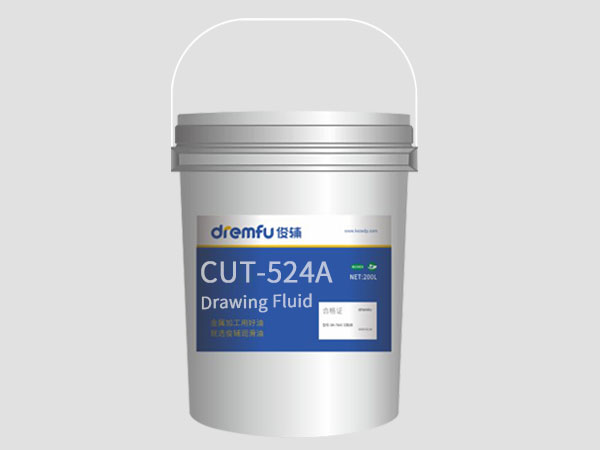
One of the most effective ways to reduce friction is by ensuring that the lubricant forms a consistent and uniform protective film on the aluminum surface.Modern Aluminum Alloy Water Based Drawing Fluid formulations contain additives that help the fluid cling to the metal and maintain a low-friction interface even under high-speed drawing.This thin protective film reduces direct metal-to-metal contact,allowing the sheet to flow smoothly through the die without unnecessary resistance.
Heat reduction is another core function.Water-based lubricants naturally offer far better cooling capability than conventional oils because water dissipates heat quickly.When a water based drawing lubricant for aluminum is engineered with high-quality emulsifiers and anti-wear additives,it not only cools effectively but also ensures stable lubrication even when temperatures rise.This prevents the lubricant from breaking down and maintains consistent aluminum deep drawing lubrication throughout the entire process.
Another key factor in friction reduction is the use of optimized die materials and surface coatings.Even when using premium lubricants,poor die surface finish can contribute significantly to wear and heat buildup.Many manufacturers combine hard coatings such as TiN or DLC with a high-performance aluminum alloy Water Based Drawing Fluid to achieve the best results.The coating minimizes roughness,while the lubricant manages heat and metal flow,creating a more controlled and predictable drawing environment.
Flow characteristics also play an important role.A lubricant with poor wetting ability will not spread evenly across the aluminum surface.This results in dry areas or“hot spots,”which are prone to scratching.A well-formulated water based drawing lubricant for aluminum distributes evenly across the sheet,ensuring full coverage.This uniform wetting enhances cooling efficiency and dramatically improves metal flow during deep drawing.
In addition to chemistry and equipment,process parameters must also be controlled.Excessive drawing speed increases frictional heat,while improper blank holder force can cause sticking or tearing.Many factories find that by combining optimized settings with effective aluminum deep drawing lubrication,they achieve far more stable production results.The lubricant reduces resistance during deformation,allowing manufacturers to increase output speed without risking part defects.
Another overlooked factor is the cleanliness of both the aluminum surface and the die.Oil residues,debris,or old lubricant buildup can disrupt the performance of new fluids.A clean production environment ensures the aluminum alloy Water Based Drawing Fluid maintains consistent film formation each cycle.Since water-based lubricants are easier to clean and leave minimal residue,they help reduce contamination-related friction issues.
The stability of the lubricant is critical as well.A high-quality water based drawing lubricant for aluminum resists foaming,oxidation,and thermal breakdown.This ensures the lubricant remains effective even during long production runs,maintaining a stable lubricating layer that protects surfaces and absorbs heat.Many modern formulations also include anti-corrosion agents to protect aluminum from staining or oxidation during and after processing.
Manufacturers who have upgraded their lubrication systems often see immediate improvements in surface finish,dimensional accuracy,and die lifespan.With better cooling and lubricity,cycle time can be shortened without sacrificing quality.This gives factories higher efficiency and reduces production costs.
In conclusion,reducing friction and heat in aluminum alloy drawing processes requires a combination of high-performance lubricants,optimized die engineering,and proper process control.A premium aluminum alloy water based drawing fluid offers superior cooling,excellent surface protection,and stable lubricity under demanding conditions.By selecting a specialized water based drawing lubricant for aluminum and maintaining strict operational standards,manufacturers can achieve smoother metal flow,prevent galling,extend die life,and ensure consistent aluminum deep drawing lubrication throughout the production line.

Guangdong Junfu Lubrication Technology Co., Ltd. is a private science and technology enterprise integrating independent research and development, production, sales and service.
Copyright © 2026 Guangdong Junfu Lubrication Technology Co., Ltd. All rights reserved.